My cousin and great aunt celebrating the holidays together like we do every year. An important tradition for all Puerto Rican families.
What is act 60? What was it supposed to do?
Act 60, Puerto Rico’s incentives code, is not a single law, but rather a container. When it was signed in 2019, it consolidated more than 80 separate tax incentive laws that had been developing for decades, including manufacturing credits, tourism incentives, international banking provisions, and so much more. The two provisions that have drawn the most attention and the most controversy are the ones formerly known as Acts 20 and 22.
Act 20, the export service is active, offering companies that export services from Puerto Rico a 4% corporate tax rate, compared to 21% on the mainland US. Act 22 is the individual investor program, which offers wealthy individuals who become bona fide residents of Puerto Rico a complete exemption from local taxes on capital gains, dividends, and passive income as long as they spend at least 183 days of the year on the island and have not lived there within the last 10 years. Alongside this, they are also required to purchase residential property within two years of establishing their residency on the island.
“When they found out that they had incentives that had good feedback and they had incentives that had bad feedback, let's pull them together. And now it's act 60. So now when you talk about incentives, you will talk about Act 60, and if you talk about Act 60, you're talking about all of them.”
- Joaquín J. Villamil (Economist, Former President of Puerto Rico’s Chamber of Commerce, Professor at UPR and Harvard)
One consequence of this consolidation is that it has become harder to isolate the specific harm of the individual investor program since it is now bundled with policies that are generally considered sound. The law's origins lie in a specific political and economic crisis. In 2012, when Governor Luis Fortuño’s administration passed Acts 20 and Act 22, Puerto Rico was already in an economic free fall. Section 936 of the US tax code, which gives pharmaceutical companies total federal tax exemption to operate on the island, had been phased out between 1996 and 2006, but this left an unfilled economic void.
“Our reporting on Act 22 has found that its intended goal of job creation and investment on the island has largely failed and is limited at best. a large number of Act 22 and sent to Holders benefit from it, not paying tax on Capital gains, without investing or creating jobs on the island.”
- Luis Valentín ( Lawyer and Investigative journalist for Centro de Periodismo Investigativo)
To qualify for the individual investor program, a person must not have lived in Puerto Rico in the previous 10 years. This single requirement, which is framed as an anti-abuse measure, excludes the vast majority of Puerto Ricans who have spent their lives on the island. This is not by accident. Stanford Anthropologist and PhD student in medicine puts it plainly, “ those were excluded from the law and its tax benefits are in their majority Puerto Ricans. I believe the spirit behind the law is to create a Puerto Rico without Puerto Ricans”.
Furthermore, attorney Carlos Francisco Ramos Hernandez of the Centro de Periodismo Investigativo Transparency Program frames the broader pattern: “Act 60 is the latest manifestation of Puerto Rico's failed ‘ Economic Development’ strategy of offering tax incentives to attract investment. Economic studies have shown that after years of these failed policies, companies that come to Puerto Rico don't necessarily improve the local economy because the majority of the money leaves the island. Therefore, there is no long-term economic growth, and it undermines competitiveness.
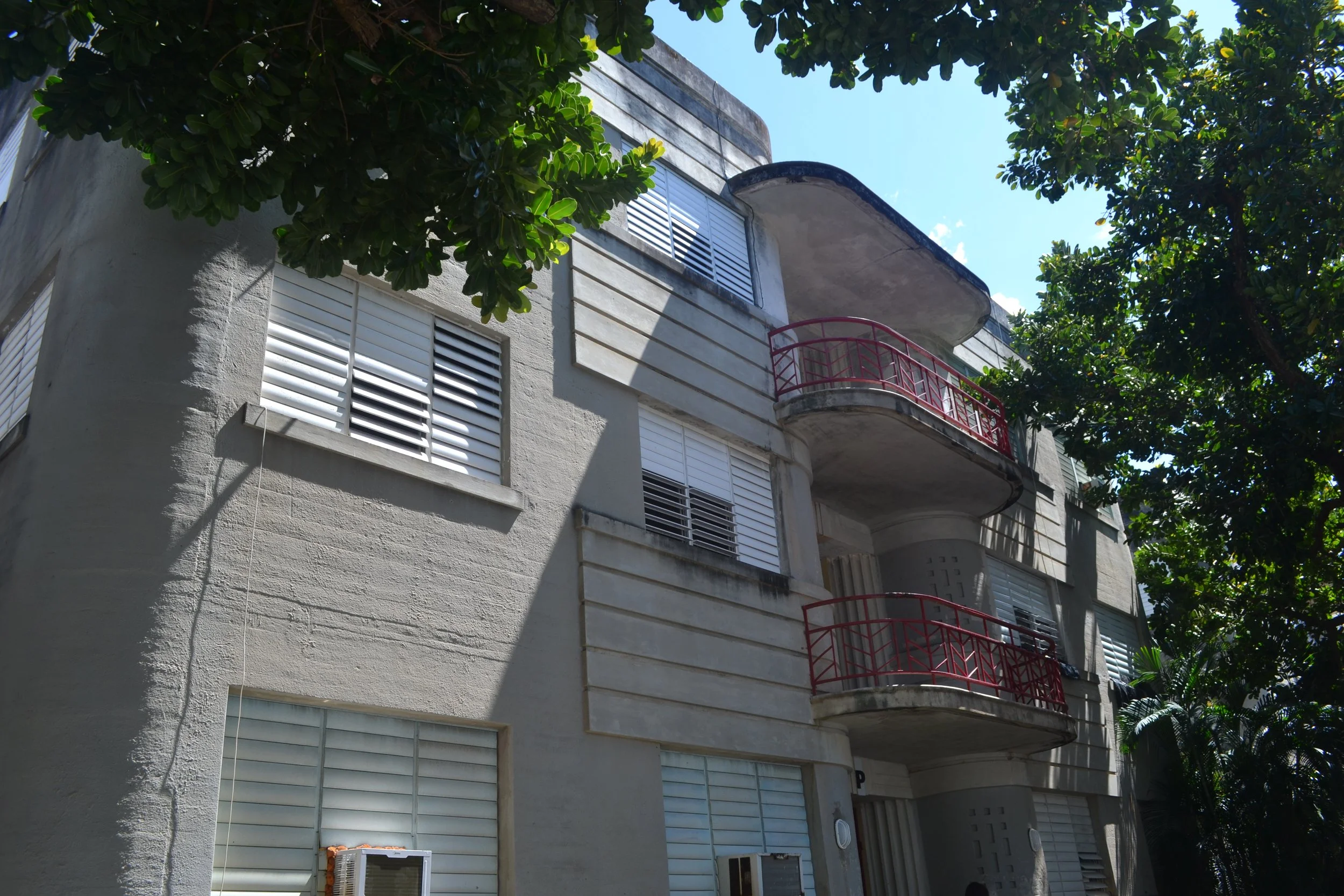
Well constructed low income housing in a previously dangerous part of Puerta de Tierra in San Juan.
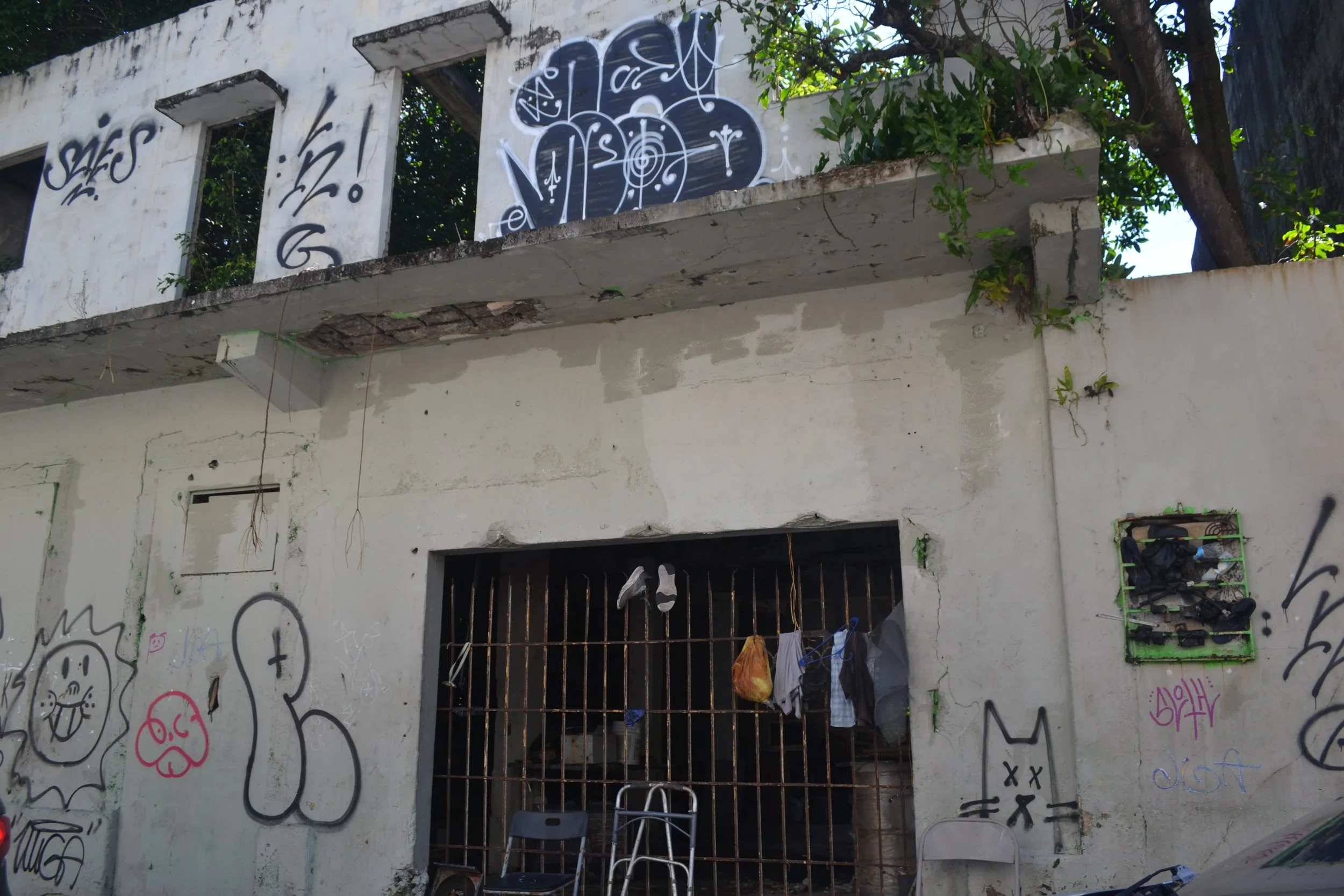
Run-down building a few blocks away from the low-income housing seen to the left. Inside are clothes and food wrappers; this is someone’s home.
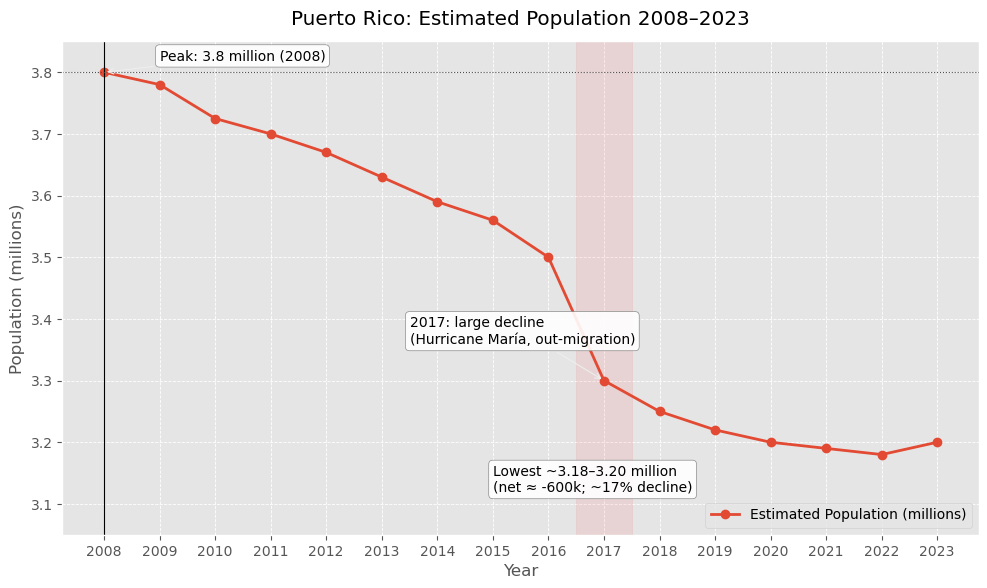
Chart generated by Magicschool
What is happening to locals?
In the year 2000, Puerto Rico's population peaked at about 3.8 million; however, it now stands at about 2.3 million, a loss of more than 600,000 people. It is predicted that it could even fall below 3 million before 2030. A deeper dive into the demographics of those leaving and those staying reveals something important about the future of the island.
The people leaving our disproportionately those in their mid-20s to mid-40s working as adults who pay taxes, buy homes, form families, and most importantly, sustain the local economy. What remains on the island is a population that is weighted towards those who are at least able to fund a public sector and who are most dependent on it.
“Elias Gutierrez forecast that Puerto Rico could become a ghetto of children and the elderly, ‘un ghetto de niños y ancianos.’ Who's going to pay taxes? Who's going to fund the government? the very young and the very old, the ones in no position to contribute to public finances.”
- Pedro Reina Pérez
This displacement is happening not only with those who are forced to leave the island, but also with those who are forced to move elsewhere on the island. Reina Perez describes that many university students are unable to find studios for under $800 a month, forcing them to find housing in neighborhoods that are generally considered undesirable. This is because rents climb beyond what local salaries can support, and students especially struggle to be able to find appropriate housing within budget.
The truth of the matter is that 60 beneficiaries are buying up a lot of the island. People simply cannot afford to live in the cities that they once called home. Carlos Ramos Gonzalez, a law professor at the University of Puerto Rico, told me that “[his] block consists of 19 houses. Six are owned by Act 60 beneficiaries. Five of them are not permanent residents- they come and go. We are losing historical residence. Some have decided to move because of too many ‘ lost 60’ residents. The community unit is being destroyed.”
Another factor that contributed to this issue has been the short-term rental market. Describe to me a colleague who retired after earning $30,000 a year from five Airbnb properties, which was more than double his $125,000 professor salary, while his own students struggle to find a studio for under $800 a month on those same streets. Every unit that is converted to a short-term rental is one that no local family can afford to live in.
How is this affecting the culture?
Puerto Rico has a distinct cultural identity that has been built over centuries. This includes traditions like Bomba and Plena music, which originated on the island, as well as foods like pasteles and mofongo. Puerto Rico is also known for their San Sebastian parades. Additionally, Puerto Rican Spanish is a unique aspect of the island, with a unique type of slang, rhythm, and vocabulary.
Beginning in the 90s public housing began getting privatized, which began the displacement of locals, and further got intensified by tax incentive laws like Act 60. Cities like San Juan, Arecibo, and Ponce have all seen sharp increases in expensive hotels and Airbnb rentals, as well as properties sold to non-Puerto Ricans.
The effects have shown up in a multitude of ways. There are areas throughout the island where Spanish is no longer the dominant language in businesses: locals who speak Spanish are met with responses to switch languages in order to be served.
Economic displacement not only removes people from their houses, but it's also moving businesses, social institutions, and daily rhythms, as well as artistic communities that help to bring identity and culture to a neighborhood. When a block and a town like Santurce become full of short-term rentals for visiting investors, it's not just the housing and the people that are forced out. It's also the conversations, gathering places, and the history of a community that grew over Generations. It is not uncommon for homes in Puerto Rico to be passed down through generations; therefore, much of a family's history can be lost.
One of my interviewees was Elsa Mosquera Sterenberg, the founder and CEO of Agora Cultural Architects. She stated that “artists here have lost a lot of their audience, their natural audience, because people have left the island because of many things: economic pressures, the hurricanes, everything. It was important for me to connect the diaspora with Puerto Rico.” Mosquera Sterenberg founded Agora in 2019 in order to address the representation gap for Latino artists in Boston and brings a lot of Puerto Rican artists on tours to showcase their art across the mainland US in order to support the local culture and arts that might otherwise be lost.
Reina Perez referenced the work of urban scholar Richard Florida, whose book” The Rise of the Creative Class” claimed that artists drive urban renewal. In the book, Florida failed to predict that the artist who brings neighborhoods back to life would also be displayed. “Artists would move into really dilapidated communities, open bars, small restaurants, galleries, and by doing that they would turn those very dilapidated communities into interactive real estate, which would turn displaced people ironically.” This has been something particularly visible in San Juan, Santurce.
Furthermore, one of the issues that I find to have a significant impact on those who are fortunate enough to remain on the island is that Act 60 beneficiaries generally do not try to incorporate themselves into the Puerto Rican culture. said that “they do not want to integrate into Puerto Rican culture and way of life”. His neighbors “hardly speak Spanish, their social life is always among other americans of foreigners.” It seems as though the very little interest that has been taken in supporting the arts and culture is not even in a form that many consider to be art. It's in real estate. short-term rentals.
The Slow and uneven transformation.
One of the most significant factors in understanding Puerto Rico's gentrification is recognizing that the island is not changing all at once. The economic pressures reshaping communities did not arrive overnight, and the transformation is, of course, not uniform across the island. In all honesty, several areas were already gentrifying before Act 60 existed, such as Dorado. Other areas have only recently begun to feel the pressure, and in some places, the facts are still being debated.
The CPI (Centro de Periodismo Investigativo) documented that the average property sale price in Puerto Rico increased by 63% between 2012 and 2021. This was the decade during which Acts 20 and 22 were in full effect. But almost said none, this describes the combination of increased foreign capital, short-term rentals, and limited affordable housing construction as a “Perfect Storm”.
Valentin, whose investigative reporting has traced Act 22 beneficiaries’ property purchases across the island, identifies where the effects have been the most clear. He says that real estate prices in coastal towns like Rincon, Isabela, Rio Grande, and Dorado, as well as neighborhoods in the San Juan area, have “increased dramatically”. He does note, however, that areas like Santurce and Rincon in San Juan were already experiencing some gentrification pressure before, and Act 60 accelerated them, while places like Rio Grande show a more direct connection to incoming Act 22 beneficiaries.
“When locals call a realtor, the realtor will ask: ' Are you paying?’ If you don't speak English, they will completely ignore you because they know they have a market of people who speak English or pay cash, and there's a good chance those are Act 22 beneficiaries.’
- Luis Valentín
He further described his own experience during the interview. Valentín was trying to purchase a home. He's young, professional, bilingual, and employed by a respected institution, yet he still met with cold treatment from Realtors who assumed he wasn't going to be a cash buyer. eventually, he and his girlfriend were able to find a home, but only because the property was never listed online. For this, he considers himself and his girlfriend to be very lucky.
There's another issue that comes along with gathering data, which is that there are many barriers to fully measuring it. He told me that there isn't a single database in which you can see the prices at which properties are being sold, let alone the names of the owners. Therefore, it's really difficult to do data-driven analyses of the impact of Act 60. He believes that not even the government can adequately assess the scope of the impact.
The growth of the Puerto Rican economy has also had an impact on the visual aspect of neighborhoods. For years, the economy has struggled to develop, resulting in an uneven housing and construction landscape. Wealth and development will cluster in specific areas, leaving surrounding parts untouched. Therefore, when walking around neighborhoods, it is not uncommon to pass by a freshly renovated building used as a restaurant or as housing, with a hollowed-out and run-down abandoned building next door. This deepened the divide between people who benefit and people who don’t. As communities slowly but surely begin changing, accessible spaces get bought out, resulting in the inability of many inhabitants to afford them.
Like many aspects of gentrification, this, of course, is not entirely a negative thing. Oftentimes, new development will also mean new jobs, improved infrastructure, and more. Local businesses, additionally, will receive more foot traffic as people become more interested in the area.